Combating exploitation through industry collaboration
At Block, we're focused on building products that help people participate in the economy and manage their money with greater confidence. That includes developing tools and resources that support customers at different stages of their financial lives.
Through Cash App Families, we're helping kids and teens build healthy financial habits and gain more independence with money, while giving parents and guardians the tools to stay involved. Today, one in four U.S. teens has a Cash App Card. For many, Cash App is their first experience managing money, and it's a relationship that can continue as they grow into adulthood.
Serving younger customers also comes with an enormous responsibility. Protecting children requires more than building safeguards into a product. It takes vigilance, expertise, and close collaboration with organizations that understand how exploitation happens and how to prevent it.
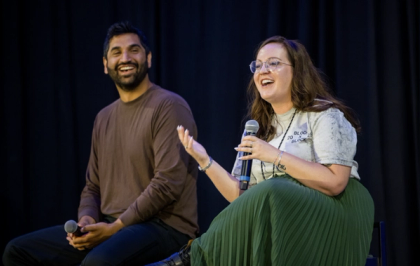
We've invested in bringing experts into Block who have spent their careers confronting these challenges. One of them is Sally Frank, our Anti-Human Exploitation Program Lead, who has more than a decade of experience supporting child exploitation investigations around the world. Her expertise helps inform how we identify risks, strengthen protections, and work with others to help keep children safe. We spoke with her about what drew her to this work, how it shapes our approach to building products, and why protecting children requires collaboration well beyond Block.
What first drew you to work protecting children?
Eleven years ago, I was working at a law firm in my hometown when I learned about children being victimized in my own community. The experience changed how I understood the risks children faced, even in familiar places. I wanted to do something about it. Since then, I’ve supported law enforcement in child exploitation investigations in the United States and around the world. Throughout my career, I’ve kept asking: where is the biggest gap in protection, and how can I take what I’ve learned and apply it to help more people?
What brought you to Block?
Before joining Block, I was working in Nigeria and Côte d’Ivoire on financial extortion, helping governments strengthen their ability to investigate those crimes. That work gave me a close view of the financial side of exploitation. That experience made me interested in what it would look like to address the problem from within a financial company, alongside the people building and operating its products.
When I saw that Block had created a specialized position focused on these issues, it caught my attention. I wasn’t seeing many financial institutions create roles like this. It was an opportunity to bring what I had learned working directly with investigators into a different part of the response, where understanding exploitation could inform product decisions and recommendations for protections. Joining Block offered a way to bring that experience into technology and work across products that people use every day.
How does your work connect to the products people use?
My day involves conversations across our product and investigative teams and with external partners. Internally, I want to understand what teams are building and what challenges they’re seeing. Externally, I’m learning from law enforcement, nonprofits, and other safety specialists about emerging risks and how products can be misused.
I bring those perspectives together to recommend launch requirements, safeguards, and ways to detect exploitation. It’s a constant exchange: what are we planning to build, what are others learning, and how should that inform our decisions?
Why does this work require collaboration beyond Block?
Everyone has a different piece of the picture. A payment may follow a conversation or interaction that happened on another platform, so we don’t always have the full context. Other organizations can help us understand what happened beforehand, while we contribute a financial perspective.
That’s why relationships with other companies, law enforcement, and nonprofits matter. We learn about the trends they’re seeing and approaches that have helped them. When it comes to protecting children, I want effective solutions to be shared. If I have a solution, I want everyone else to have it.
Block’s contribution to Operation Lighthouse, a Chainalysis-led effort that brought together law enforcement, private-sector partners, and nonprofits to investigate networks linked to child sexual abuse material is just one of many examples. The collective effort generated 14,300 investigative leads across 11 cryptocurrency exchanges and payment services. Most importantly, it showed how financial intelligence can support child protection investigations even when illicit content is not present on financial platforms.
This can be difficult work. What keeps you motivated?
I’ve seen this work from many angles, in my own community, nationally, and around the world. Across those settings, I’ve seen what is possible when companies, law enforcement, and nonprofits communicate well and work together to protect children.
Knowing that the work can make a difference keeps me going. Behind every report, product discussion, and partnership is a person who may need protection. That’s who I’m thinking about.